
Early progress in digital traceability for Vietnam’s smallholder fruit sector
Smallholder fruit growers in northwest Vietnam are gaining new digital tools to strengthen production systems, meet market standards, and access higher-value markets.
Since its launch in September 2025, the Australian Centre for International Agricultural Research (ACIAR)-funded Digital monitoring of VietGAP compliance for high-value domestic markets and potential export in smallholder fruit value chains from the northwest of Vietnam project (AGB/2022/114) has completed its first key implementation phase, laying the groundwork for smarter production, stronger market access, and more inclusive, sustainable fruit value chains.
The project was launched in Hanoi with an inception meeting attended by the AHR project team (Dr Gordon Rogers, Mr Liam Southam-Rogers, Ms Nga Nguyễn and Ms Sophia Thach).
Opening remarks by Mr Pham Ngoc Mau, Ministry of Agriculture and Environment (MAE) and Ms Monica Finlayson from the Australian Embassy highlighted the long-standing agricultural partnership between Australia and Vietnam, as well as ACIAR’s three decades of collaboration. The project’s key partners – Fruit and Vegetable Research Institute (FAVRI), Vietnam National University of Agriculture, and the Northern Mountainous Agriculture and Forestry Science Institute (NOMAFSI) –presented the projects objectives and delivery approaches.
Following the inception meeting, the team conducted field visits in Son La Province, surveying eight mango, dragon fruit, and longan cooperatives and traders to identify suitable pilot value chains for digital VietGAP monitoring and market access development. Four cooperatives were selected based on production potential, market readiness, and willingness to participate. Tailored intervention packages have been designed, combining agronomic support, VietGAP certification, digital traceability applications, postharvest improvements, brand development, and capacity building.
The first agronomic activity was conducted in November 2025 with grower surveys revealing diverse levels of technical adoption, productivity, and readiness for digital tools. In response, FAVRI will develop baseline production standards and deliver targeted agronomic training with participating growers. The findings highlight strong opportunities to improve fruit quality, productivity, and sustainability through standardised practices, field-based training, and phased adoption of digital traceability systems. A demonstration trial was established at Ban Chum Cooperative, Yen Chau in January 2026 to show local farmers best practice pruning techniques to improve the pack out rate of grade 1 fruit.
Baseline socio-economic and gender studies, alongside value chain analyses of the selected fresh fruit systems, are also underway to benchmark project impacts and inform recommendations for the Vietnamese Government.
Testing of digital traceability applications is currently in progress, with the selected platform scheduled for rollout in February 2026. Together, these activities represent an important early milestone in strengthening inclusive, market-oriented fruit value chains in northwest Vietnam.
Recertification of three farmer groups for VietGAP began in November 2025 and is expected to be completed by April 2026. VietGAP certification will allow cooperatives to sell into premium markets and earn a higher income for their premium grade fruit.
Learn more about the project here.
This project has been funded by Australian Centre for International Agricultural Research (ACIAR).
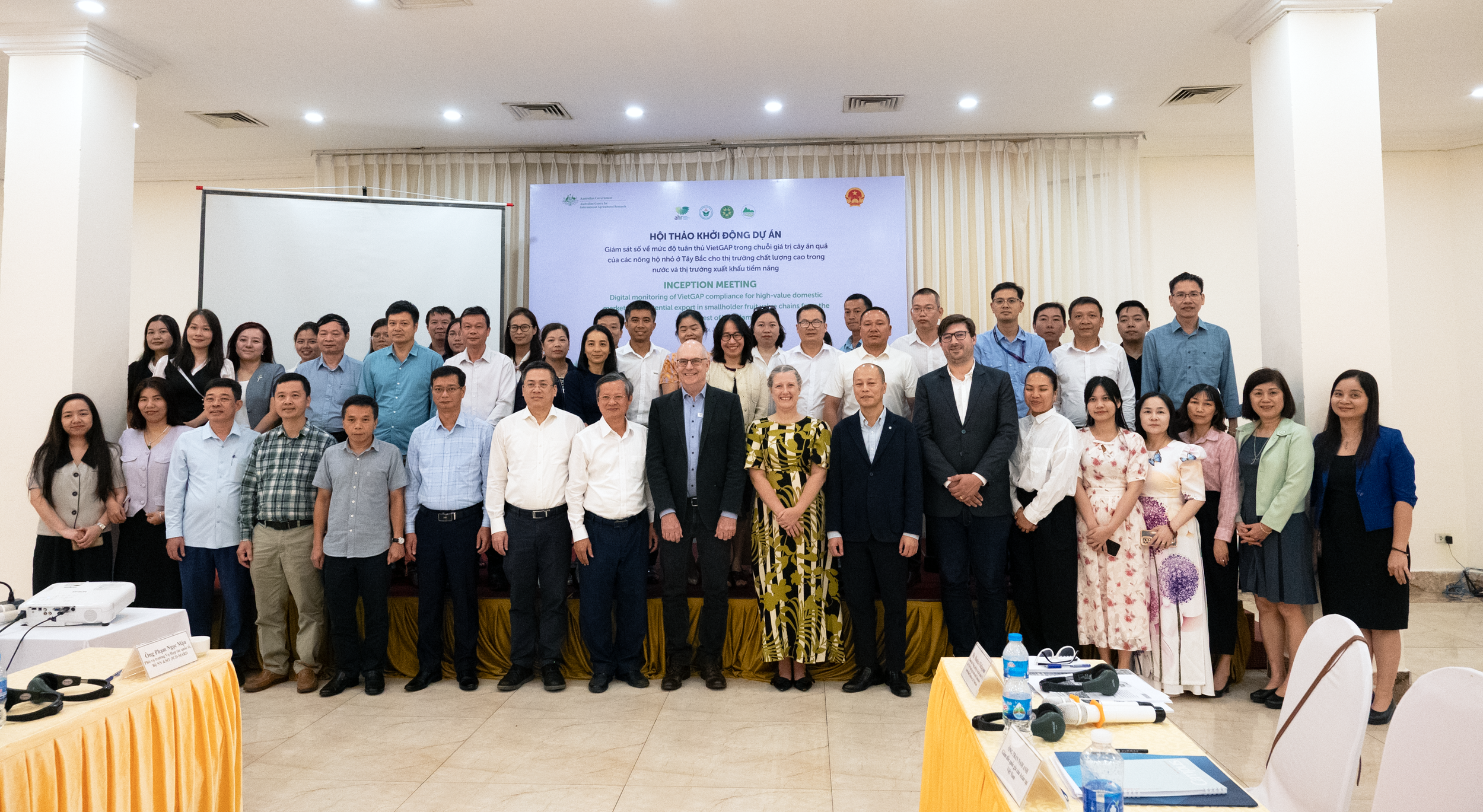
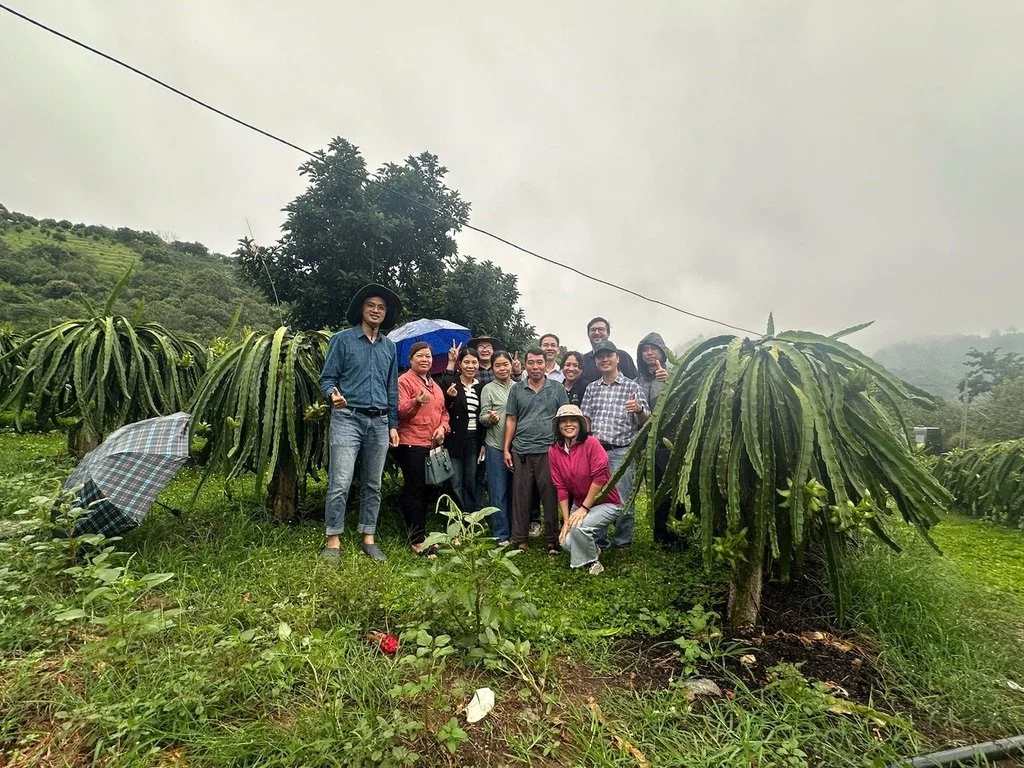
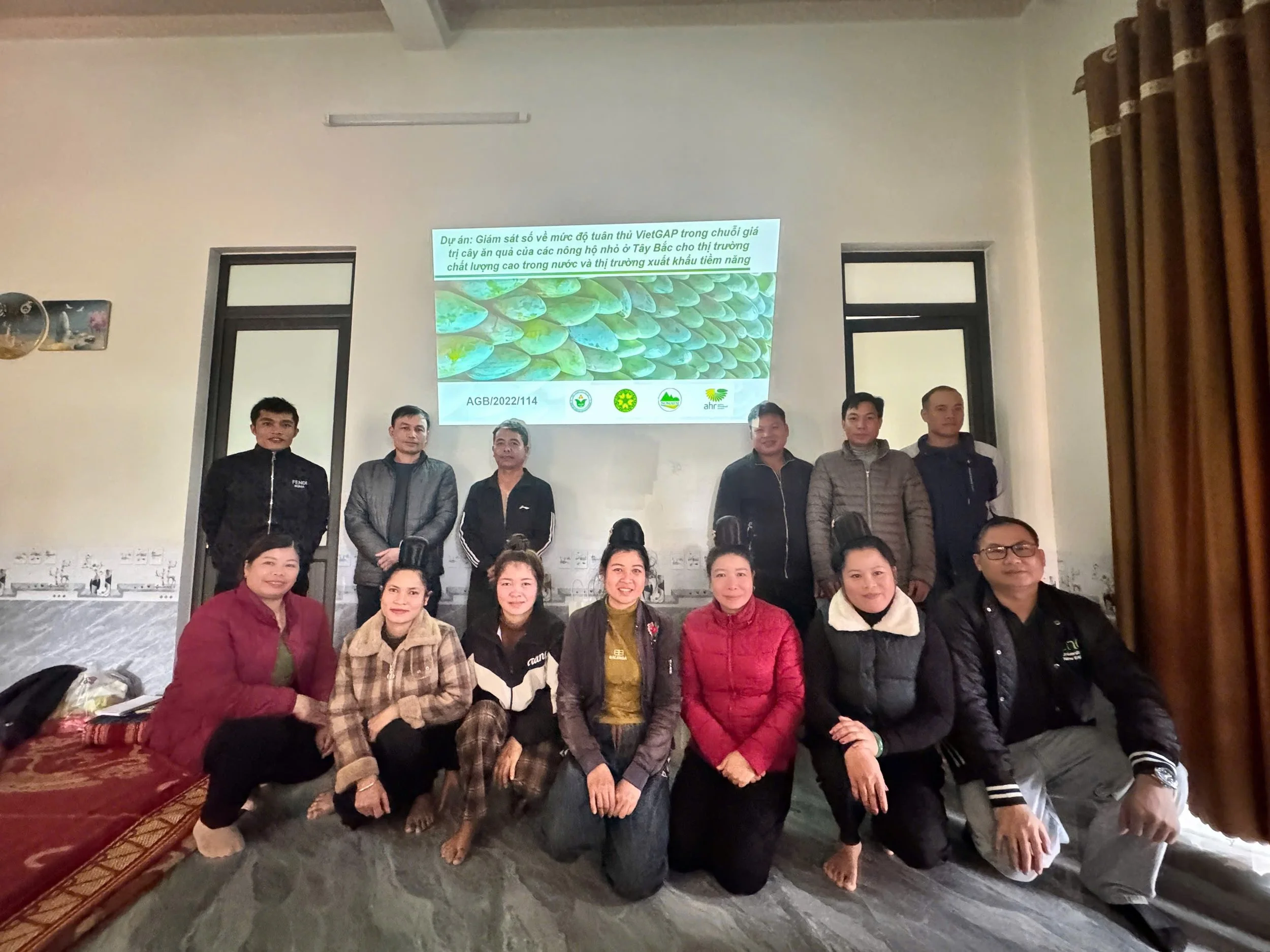
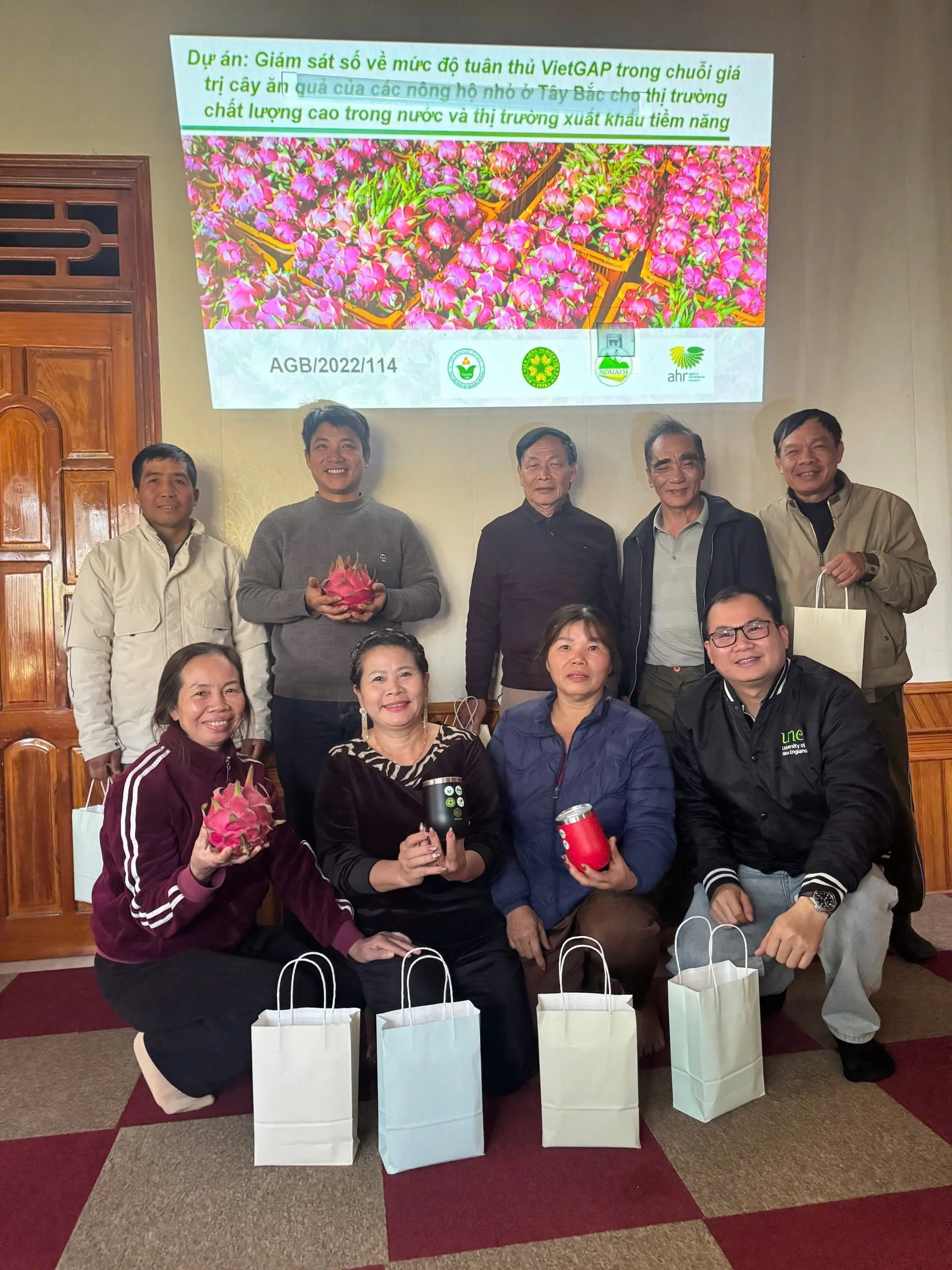
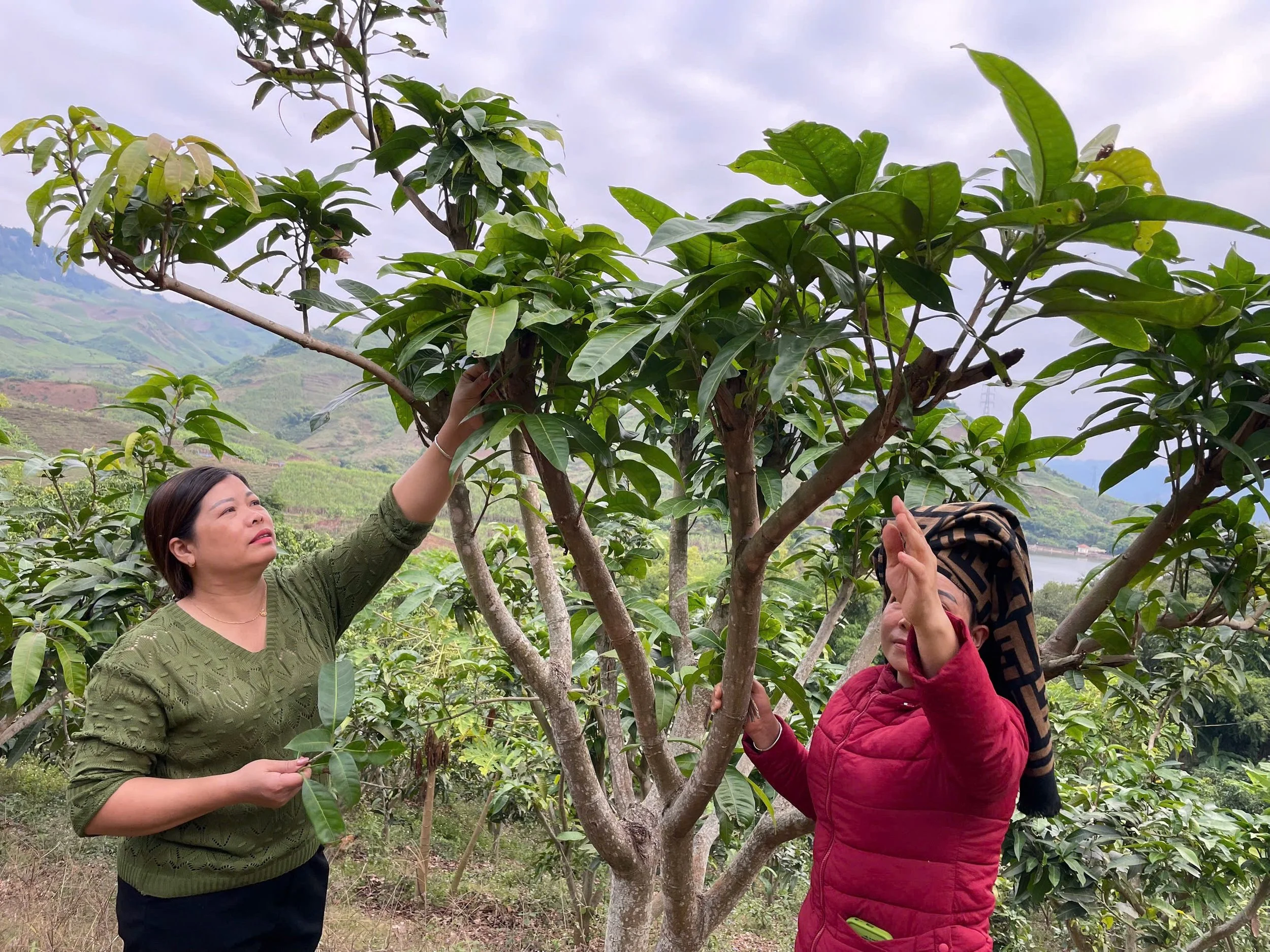
From left to right: Inception meeting participants, including representatives from the MAE, the Australian Embassy, participating cooperatives, and project delivery partners AHR, FAVRI, VNUA, and NOMAFSI, at the official project launch in Hanoi on 25 September 2025; Project team field visit to a dragon fruit cooperative in Chiềng Mung commune, Son La Province, as part of surveys to assess production practices, infrastructure, and readiness for digital VietGAP monitoring and market access development; Formal engagement with mango and dragon fruit cooperatives, marking their selection as pilot sites for agronomic support, digital traceability tools, and value chain development under the project; Ms Nguyễn Thị Thu Hương (FAVRI) inspecting mango orchards during initial agronomic assessments and grower surveys, aimed at establishing baseline production standards and identifying key constraints to productivity and quality.