

How can growers improve walnut blight management while making the most of their spray programs? That’s the question that forms the backbone of a Hort Innovation Frontiers project Management of bacterial blight in walnuts
AHR’s Dr Naomi Diplock and Isabella Elmers are looking for answers through a series of orchard trials in the Riverina.
In October, the team visited Stahmann Webster’s Leeton orchard and Duxton Nuts’ Murrami Grove orchard to test potential management strategies under commercial growing conditions. The visit also provided an opportunity to share early project findings with growers at the Australian Walnut Symposium in Warragul.
Testing new spray programs at Leeton
Following laboratory screening of ten products and product combinations, five spray programs were selected for further testing at Stahmann Webster. In the lab, several combinations had inhibited the walnut blight bacterium at lower copper concentrations than copper hydroxide alone, offering potential opportunities to improve spray program efficiency. Other chemicals were also identified as potential alternatives to Mancozeb.
In setting up the field trial, Naomi and Isabella inoculated tagged branches with a strain of the walnut blight bacterium collected from the same orchard. The trial involves 36 trees, including an untreated, inoculated group to provide a comparison.
Assessments planned for November and December will track the development of blight symptoms on nuts and help determine how effectively each spray program protects developing fruit.
The team also assessed the establishment of a cover crop between orchard rows. Further monitoring in December will examine canopy temperature, humidity and blight incidence to explore whether ground cover influences orchard conditions associated with disease development.
Getting the most from every spray at Murrami Grove
At Duxton Nuts’ Murrami Grove orchard, the focus shifted to spray application and coverage.
Naomi and Isabella investigated eight combinations of sprayer travel speed, water rate and the addition of an organosilicone surfactant. Using fluorescent dye and UV photography, they measured spray coverage across 579 leaflets and 94 nuts.
The resulting data will help identify whether changes to travel speed and water rate influence spray coverage, and whether the surfactant improves how spray is distributed throughout the canopy.
A separate commercial-scale strip trial is also underway at Murrami Grove, testing the addition of the surfactant to the orchard’s standard copper and mancozeb spray program. Blight assessments in December, before shell hardening, will help determine whether the changes to application translate into improved disease management.
Taking research findings to growers
Research is only half the story – getting the findings into growers’ hands is where the real value lies. The annual Australian Walnut Symposium in Warragul provided just that opportunity, with Izzy and Naomi presenting a project update to 31 delegates, including 22 walnut growers.
The presentation showcased early laboratory and orchard findings, insights from previous cover crop and hedging trials, and a demonstration of how UV photography can reveal where spray is reaching within the canopy. It also gave growers an opportunity to see how the research is progressing and discuss what the findings could mean for their own orchards.
For Naomi, these conversations are an important part of the research process.
“It’s really valuable to share what we’re finding with growers and hear their perspectives. They're the ones putting these practices into action, so understanding what works for them is just as important as understanding what we find in the trials,” Naomi said.
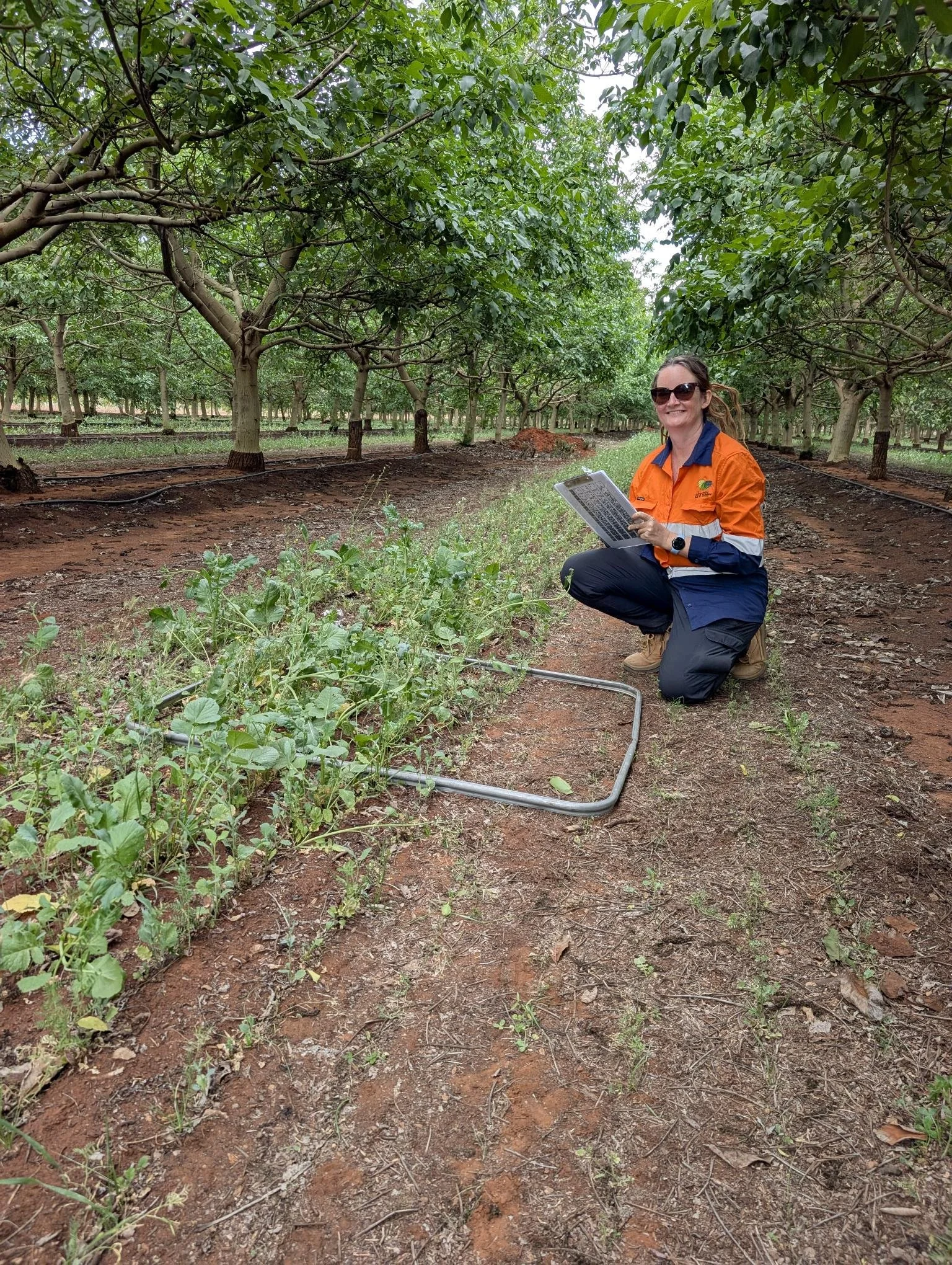
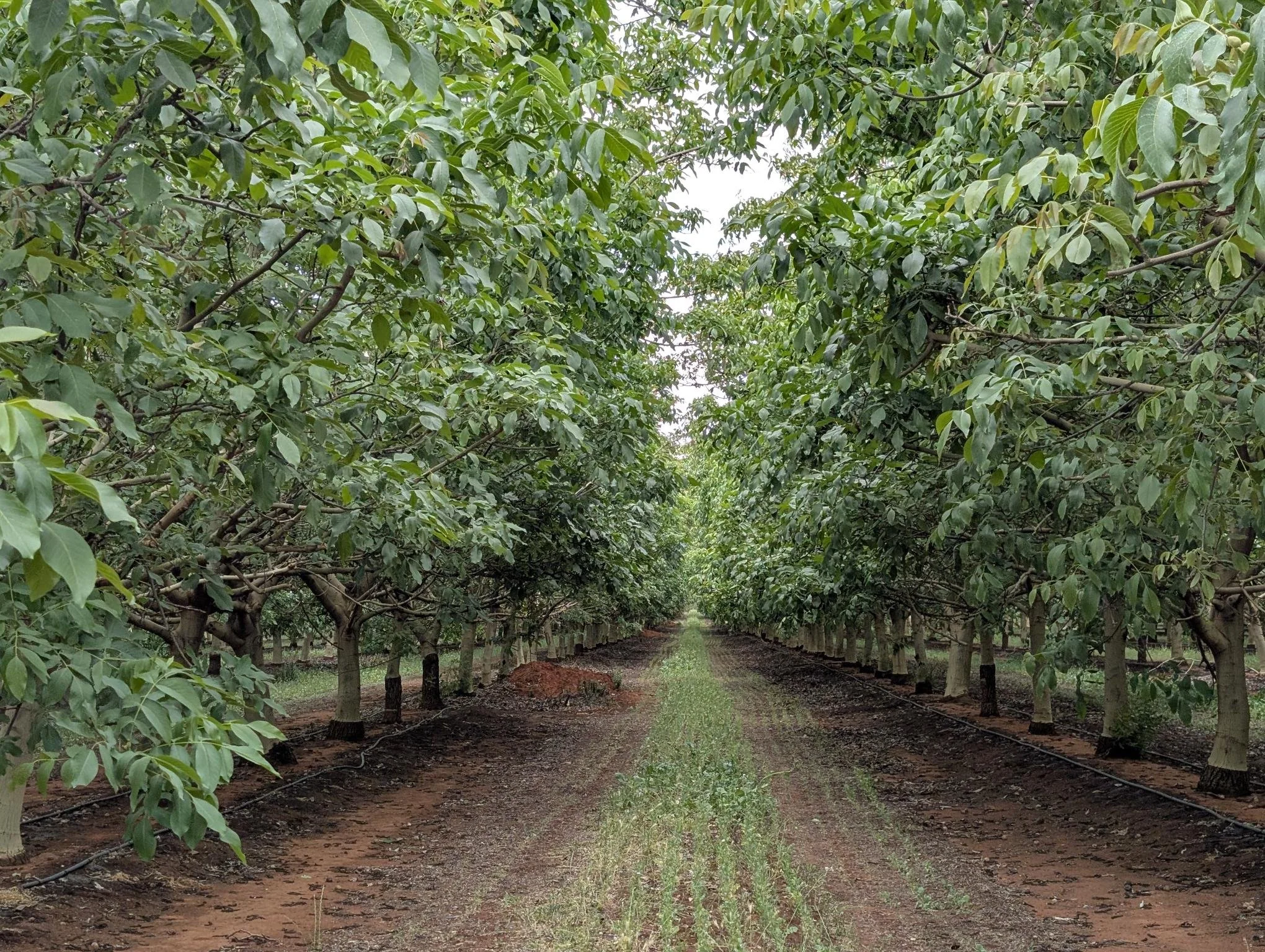
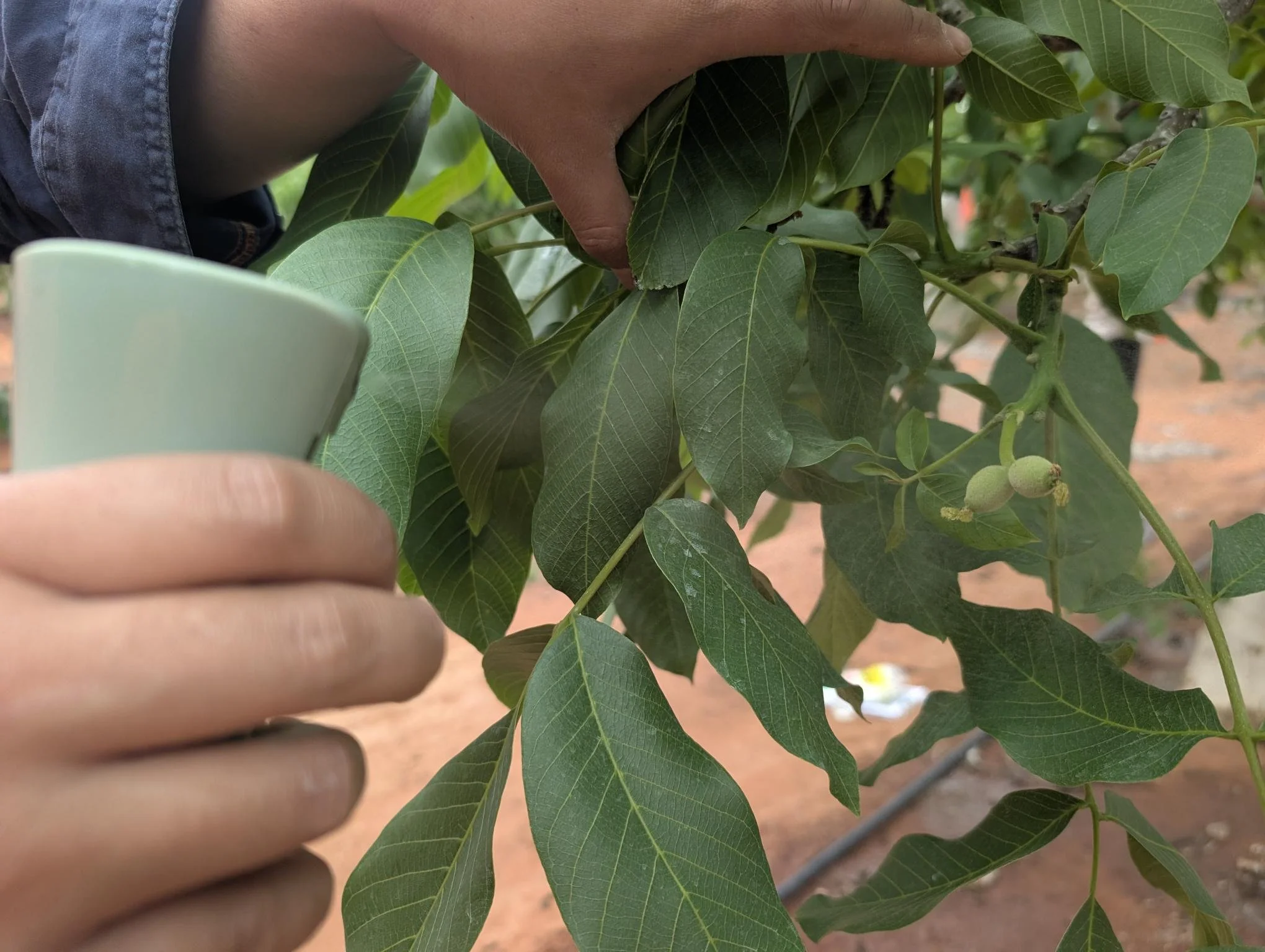
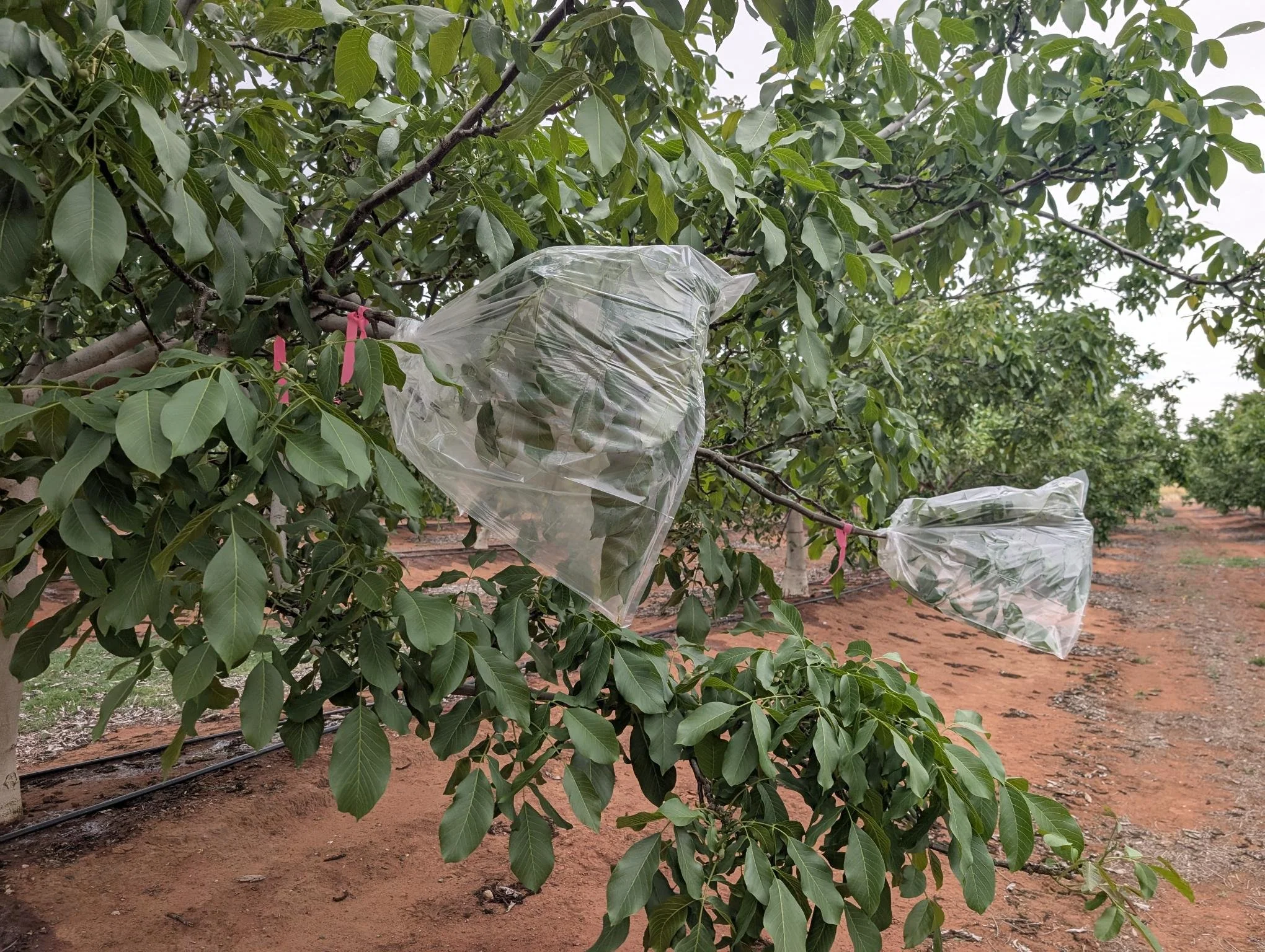
From top left: Naomi assessing cover crop establishment and growth as part of a trial investigating the influence of cover crops on orchard environmental conditions and walnut blight incidence and severity; view of cover crop observational trial; inoculating walnut fruit with the walnut blight pathogen to promote disease development for evaluating the efficacy of chemical treatments; walnut branches bagged for 48 hours following inoculation to create favourable environmental conditions for walnut blight infection and disease development.
This project is funded through Hort Innovation Frontiers with co-investment from Applied Horticultural Research (AHR), Stahmann Webster, and Duxton Nuts, and contributions from the Australian Government