
Trials test smart pollination tools
One of the key focus areas of the Hort Frontiers program Growing Horticulture Through Protected Cropping Innovation (AS23001) is to identify and trial technology to assist and improve pollination.
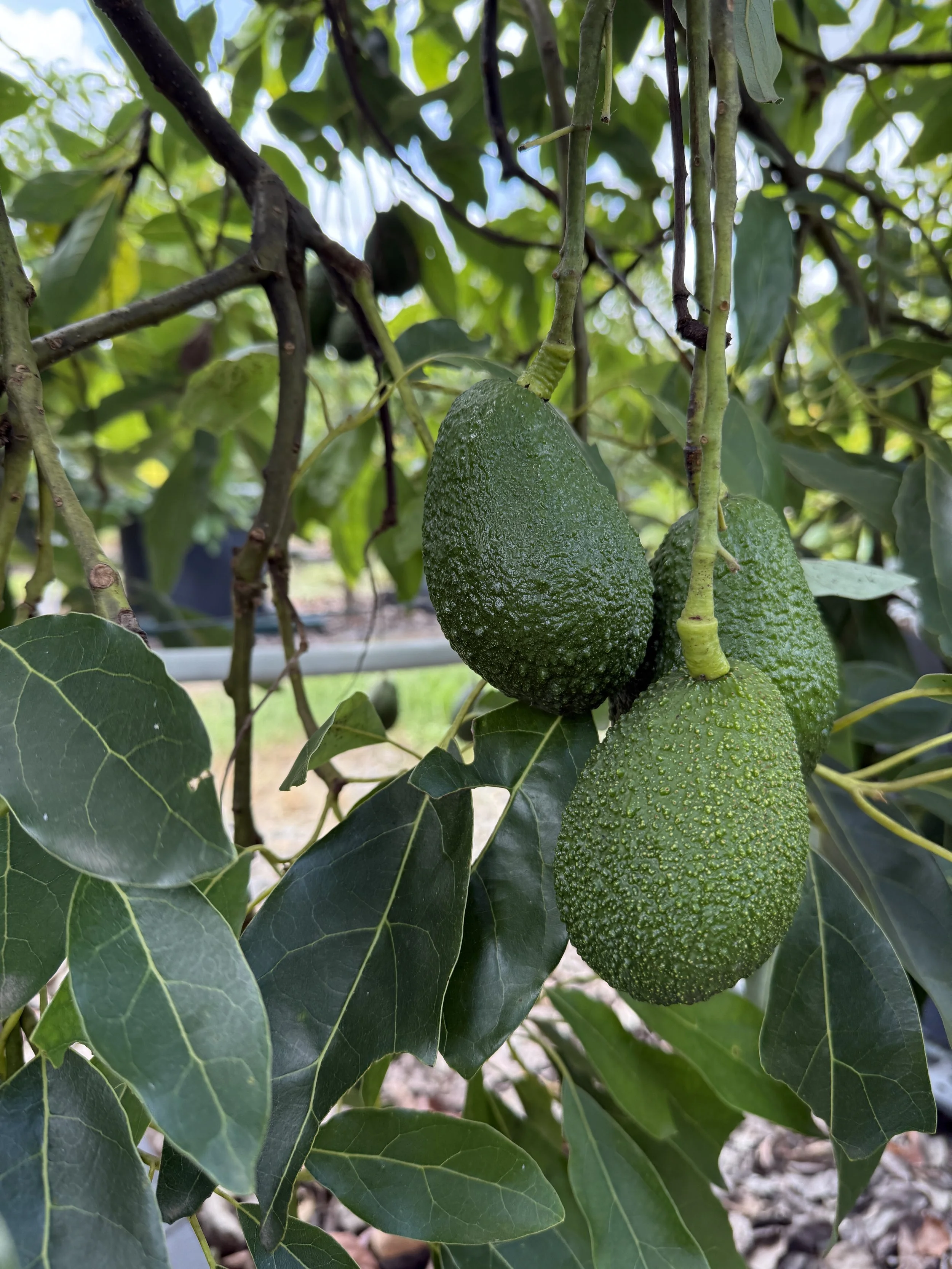
Costa Group, which is a key partner in this $47 million multi-partner program, has implemented a new containerised, under-cover avocado production system for avocados and is exploring data driven tools to enhance avocado production, including pollination.
Dr Alvaro Vidiella, National Agronomy Manager for Costa’s Avocados and Bananas, said pollination was critical in substrate production methods, but faced additional challenges because of the netting.
“It’s hard to keep the bees in and to ensure they can be successful at pollination, which is critical for fruit set,” Dr Vidiella said.
As part of the research program, led by Applied Horticultural Research (AHR) and delivered through Hort Innovation, two new pollination tools are being trialled, both in under-cover and open field settings.
Dr Vidiella said they were working with BeeHero, which provides sensors that measure the activity of the bees and bee hives.
The BeeHero In-Hive sensor monitors hive temperature, humidity, colony acoustics, magnetic field, hive position, and orientation, while the in-field sensors measure bee activity in crops.
“From our initial trials there seems to be a correlation between the activity of the bees and fruit set. As expected, the more active the bees are the more fruit set there is. Having a continuous, real time window into bee activity would be a significant improvement to our pollinator management” he said.
“Through the in-hive sensors we can determine if the hive is active, or if it is stressed. Under netting bee hives tend to deteriorate fast so this can help us determine when the best time is to change the hives.”
In a second trial, Costa is working with BloomX, which uses an electrostatic field to attract pollen.
Dr Vidiella said the hand‑held devices were used in the orchard to swipe male flowers, where pollen was attracted and held on an electrostatically charged fabric paddle. The static charge caused pollen grains to cling to the paddle, allowing them to be efficiently transferred onto female flowers for pollination.
“Pollination in avocados is a bit more complex than in many other crops. In a single variety, flowers do not function as female and male at the same time. Using this system, we can collect pollen when flowers are in their male phase and then apply it to flowers when they enter their female phase,” he said.
The initial results from our replicated trials are positive, with an increase in flowering of 85 % compared to the standard bee pollination in poor pollination conditions.
“These promising results led us to increase the research activity on this subject in the 2026 flowering season. If results continue to be positive, we will consider trialling YAHAV, a mechanised version of the system currently being developed by BloomX, which features five arms on either side and is guided to ensure smooth interaction with branches, minimising disturbance.”
Dr Vidiella said the future trials would be conducted in Costa’s avocado operations in South Australia.
The Growing horticulture through protected cropping innovation program (AS23001) is funded through Hort Innovation Frontiers with co-investment from Applied Horticultural Research (AHR), Flavorite Hydroponic Tomatoes, The Costa Group, Apex Greenhouses, The Victorian Department of Energy, Environment and Climate Action (DEECA), PolyBee and contributions from the Australian Government.
The program, will help protected cropping growers maintain profitability by delivering key aspects of the Protected Cropping Strategic Investment Plan, specifically sustainability, advanced agronomy, automation to reduce labour costs, energy and improving staff skills and management.
Artilce prepared by Brigid Veale (Costa Group)