

An update from the projected cropping program
This major Hort Innovation-funded program is quietly reshaping what's possible in Australian protected cropping - with automation, digital tools, and smarter growing systems moving from pilot stage into commercial reality across tomatoes, berries, avocados, and orchard crops.
The Growing Horticulture through Protected Cropping Innovation program — delivered by Applied Horticultural Research (AHR) in partnership with Hort Innovation's Hort Frontiers fund — is one of Australia's most ambitious and wide-ranging efforts to future-proof the protected cropping sector.
Covering multiple commodities, the program unites growers, researchers, and tech providers to tackle key challenges: labour, sustainability, energy, and smarter agronomy.
Now in its second year, updates from key partners show early wins for protected cropping growers.
Automation moving into full commercial deployment
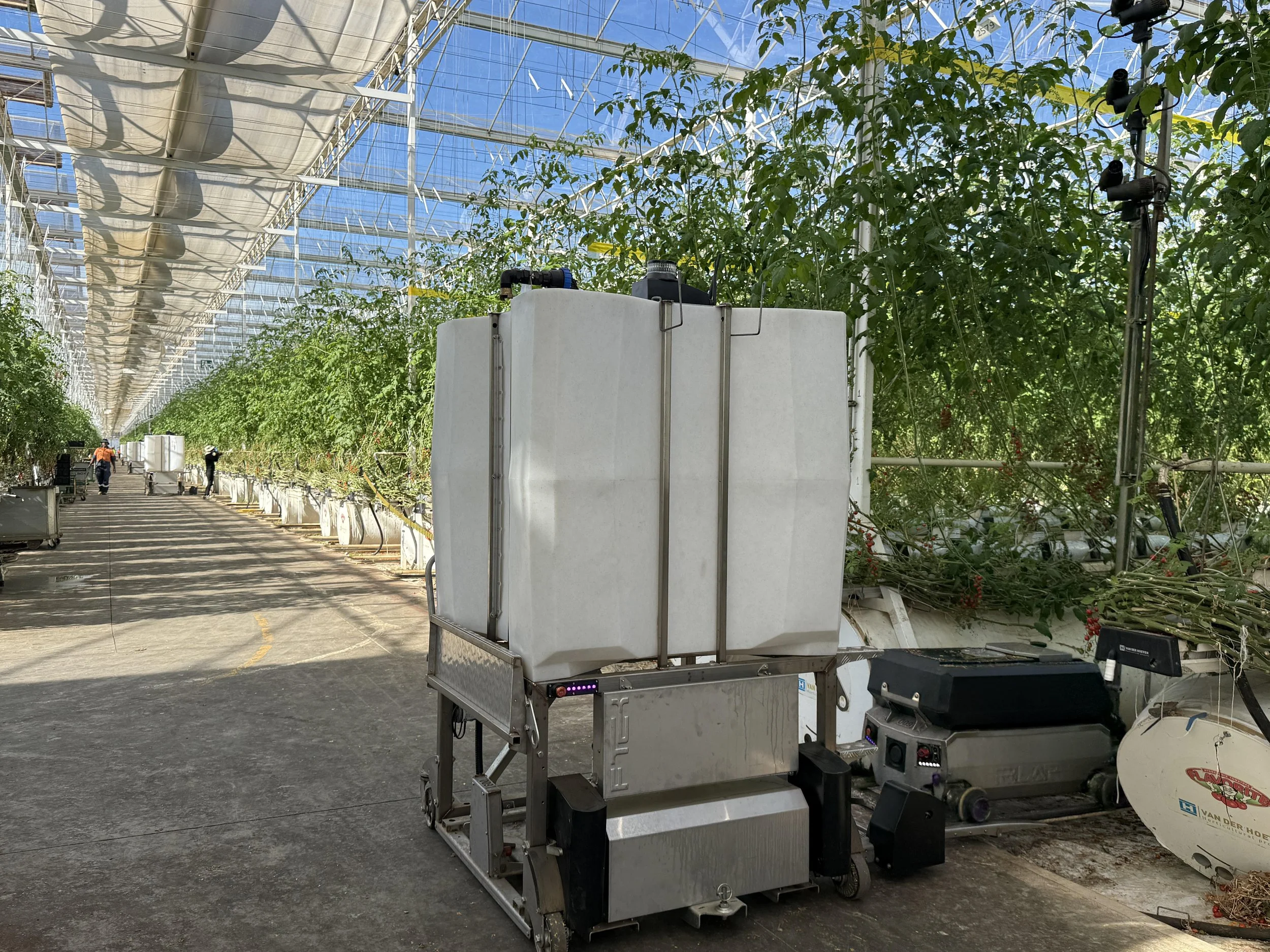
A significant headline from the last year is the automated pollination technology developed in partnership with Flavorite Tomatoes, which has crossed the threshold from trial into full commercial deployment.
Trials of the technology confirmed consistent pollination rates, improved fruit set, and meaningful labour savings. It's a development that stands to benefit not just Flavorite, but the broader greenhouse tomato industry.
Flavorite is rolling out the units across its three tomato growing sites, marking the first time Australian tomato growers have had access to a commercially available automated pollination system.
Automated spraying has also progressed significantly, moving from pilot testing into operational deployment. Results have shown spray coverage and reliability matching or exceeding manual methods, with the added benefit of reduced chemical exposure for workers, a safety improvement that will resonate with growers facing increasing WHS obligations.
On the packing and grading front, an automated line is undergoing calibration. Developers and engineers have taken a creative approach to improving grading accuracy, redesigning the system's algorithm to teach it ‘what good looks like’ rather than simply flagging defects. Phase-one testing is progressing, with further refinements underway.
A national training hub opens its doors
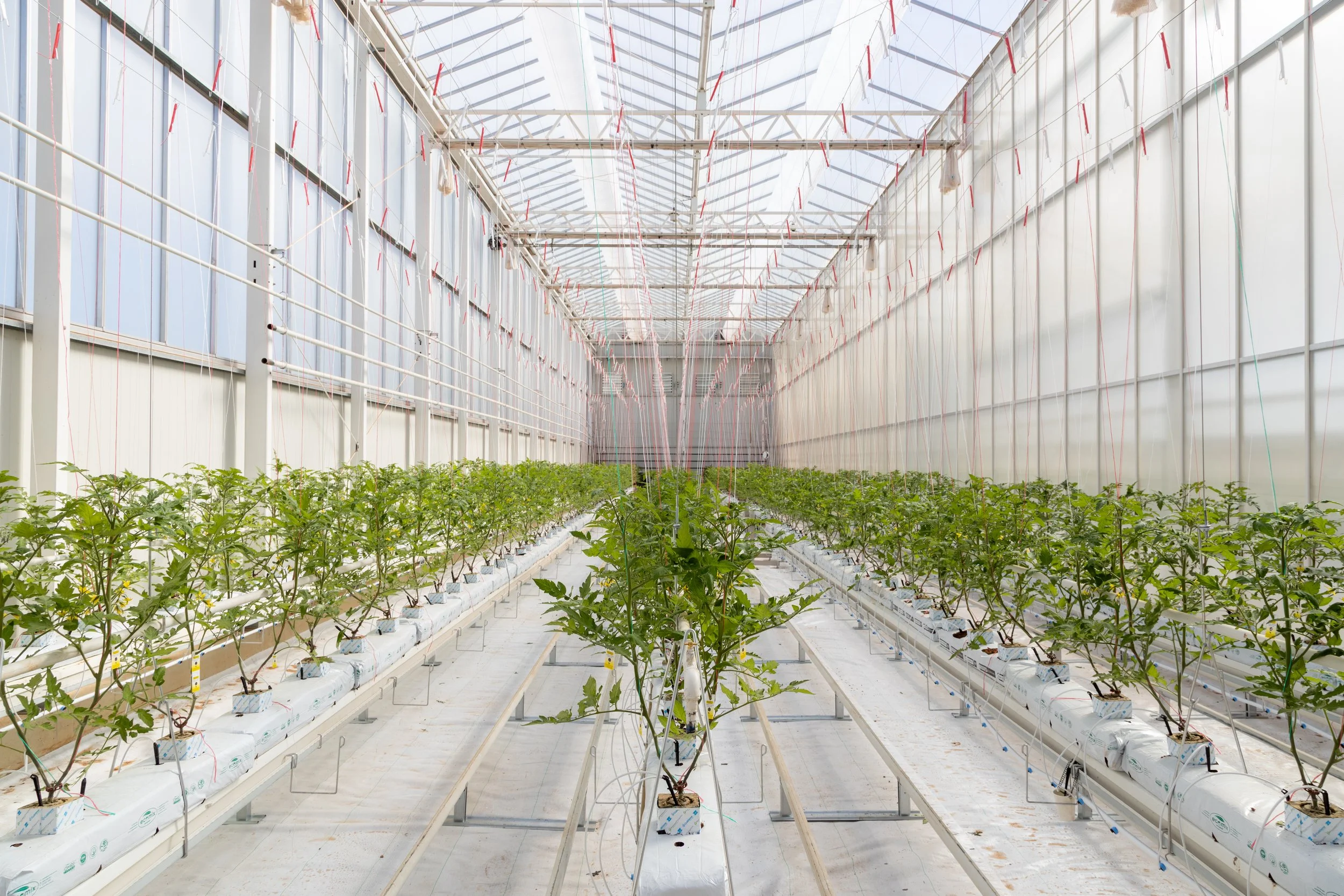
In Virginia, South Australia, Apex Greenhouses has completed construction and commissioning of a state-of-the-art research and training facility, with the site now actively running yield and varietal performance trials under advanced production conditions.
Since its official opening in July, the facility has hosted a stream of industry visitors, training events, and demonstrations, and is establishing itself as a genuine national platform for knowledge exchange and capability building in high-tech protected cropping.
A recent Expression of Interest invited industry to propose grower-focused trials at the Apex Greenhouse. It’s now closed with strong interest, and selected trials will roll out soon under real commercial conditions.
Work is also underway reviewing AI-driven growing systems to guide future decision-support tool trials. The site has now fully shifted from build phase to active research and training.
Autonomous platforms and orchard protection research
Costa’s development work on LiDAR-based yield and fruit-size modelling for avocados is progressing, with a handheld LiDAR proof-of-concept trial scheduled for completion in 2026. Early-stage research into autonomous pruning systems is also laying the groundwork for future innovation.
Agriculture Victoria's research at the Tatura SmartFarm has also generated valuable applied findings across several fronts. A recently published study in Scientia Horticulturae reporting four years of data on solar panels over pear trees found that while fixed panels provided protection from sun and hail damage, they did cause a significant reduction in yield and fruit colour due to a 40–46% drop in light interception.
AI yield forecasting closing in on seven-day accuracy
Another exciting technology story emerging from this program involves Polybee, which has achieved 80–90% accuracy in forecasting crop yields one to three days ahead of harvest — and is now working to extend that window to seven days. The implications for harvest planning and supply chain coordination are significant.
Working alongside Flavorite and growers Hillwood Berries, Polybee's system uses computer vision and AI to sample 10–20% of plant rows, capturing a representative snapshot of crop performance. In tomato glasshouses, mobile cameras on trolleys move through rows; in strawberry tunnels, drones provide an aerial view.
The technology doesn't just count fruit — it tracks colour changes to model ripening speed in response to microclimate conditions, turning visual data into actionable forecasts.
Environmental sensing trials in berries
AHR has commenced a trial with a leading Western Australian strawberry producer to evaluate environmental sensing technologies, with baseline data collected and sensors now monitoring key parameters across varying seasonal conditions.
A second trial with a blueberry producer will assess automated data collection and monitoring technologies, with a focus on improving irrigation and nutrition management through real-time data insights.
Looking ahead…
With the program now firmly underway and early results emerging, the focus is shifting toward long-term impact and real-world adoption.
While initial trials are delivering promising insights, the broader goal remains to ensure these innovations translate into practical value for growers across the sector.
“We still have seven years left in the program, so this is just the tip of the iceberg,” Program Manager Anita Chennell said.
“It's not just about proving these technologies work — it's about helping growers figure out how they can implement them in their own operations.”

The Growing horticulture through protected cropping innovation program (AS23001) is funded through Hort Innovation Frontiers with co-investment from Applied Horticultural Research (AHR), Flavorite Hydroponic Tomatoes, The Costa Group, Apex Greenhouses, The Victorian Department of Energy, Environment and Climate Action (DEECA), PolyBee and contributions from the Australian Government.
The program will help protected cropping growers maintain profitability by delivering key aspects of the Protected Cropping Strategic Investment Plan, specifically sustainability, advanced agronomy, automation to reduce labour costs, energy and improving staff skills and management.