Inside the Carbon Robotics LaserWeeder™ Gen 2
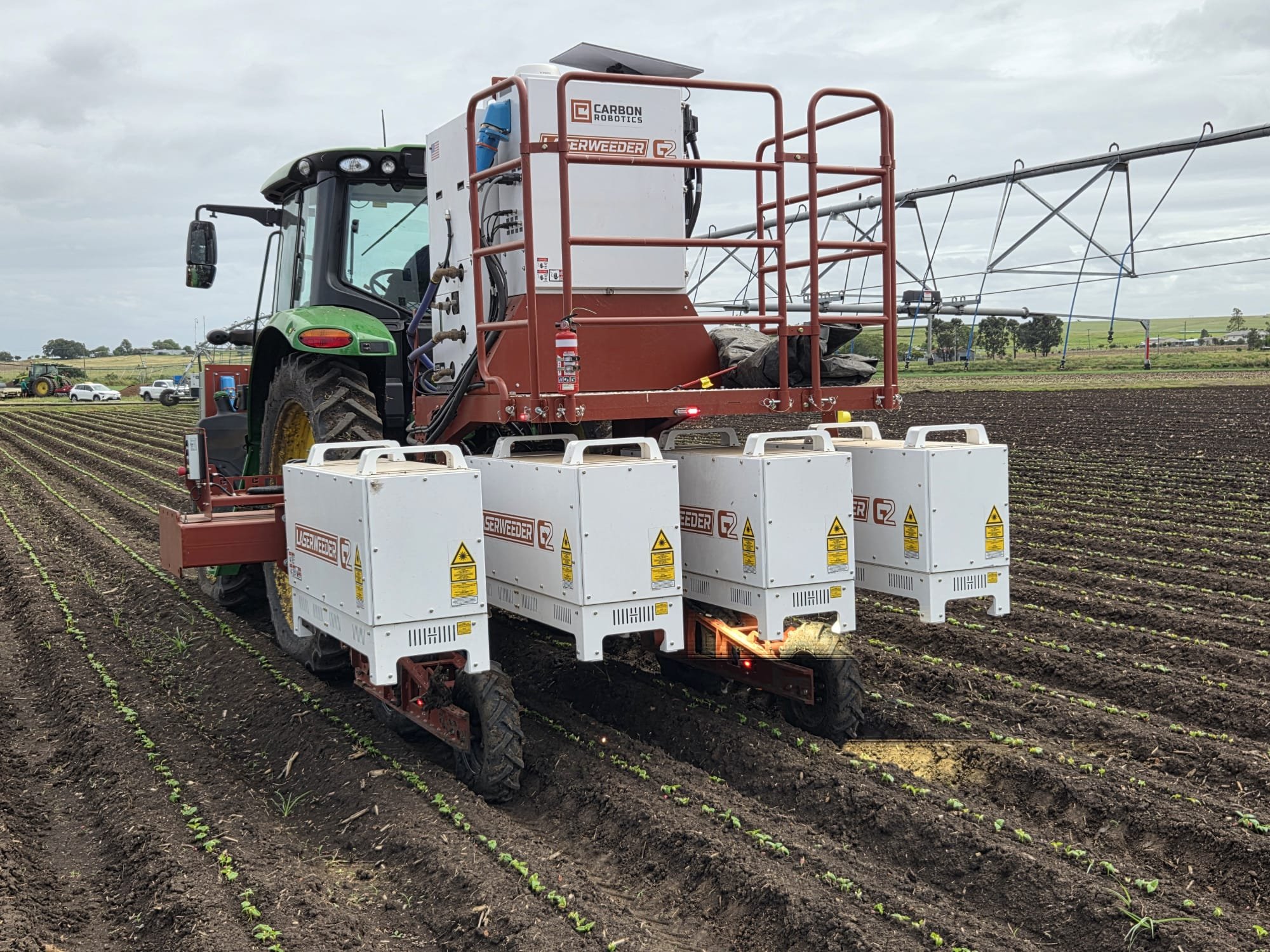
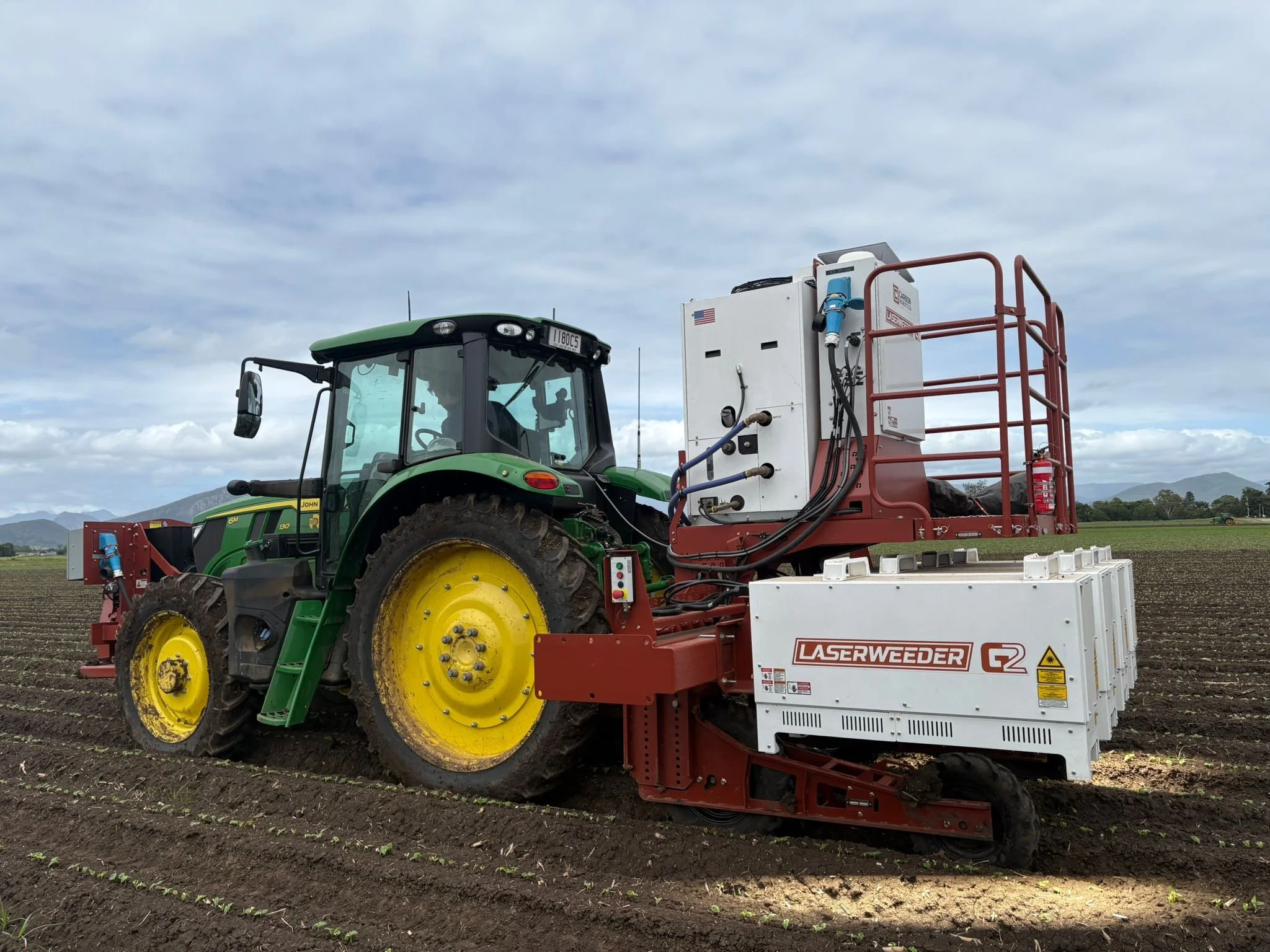
Where once hand weeding dominated the job list, a tractor-mounted machine now scans the soil line with cameras and fires precision laser bursts at emerging weeds. As part of the HortFrontiers Next Generation Weed Management project, the Carbon Robotics Gen 2 LaserWeeder™ (Gen 2) is being evaluated as a viable new approach to weed control.
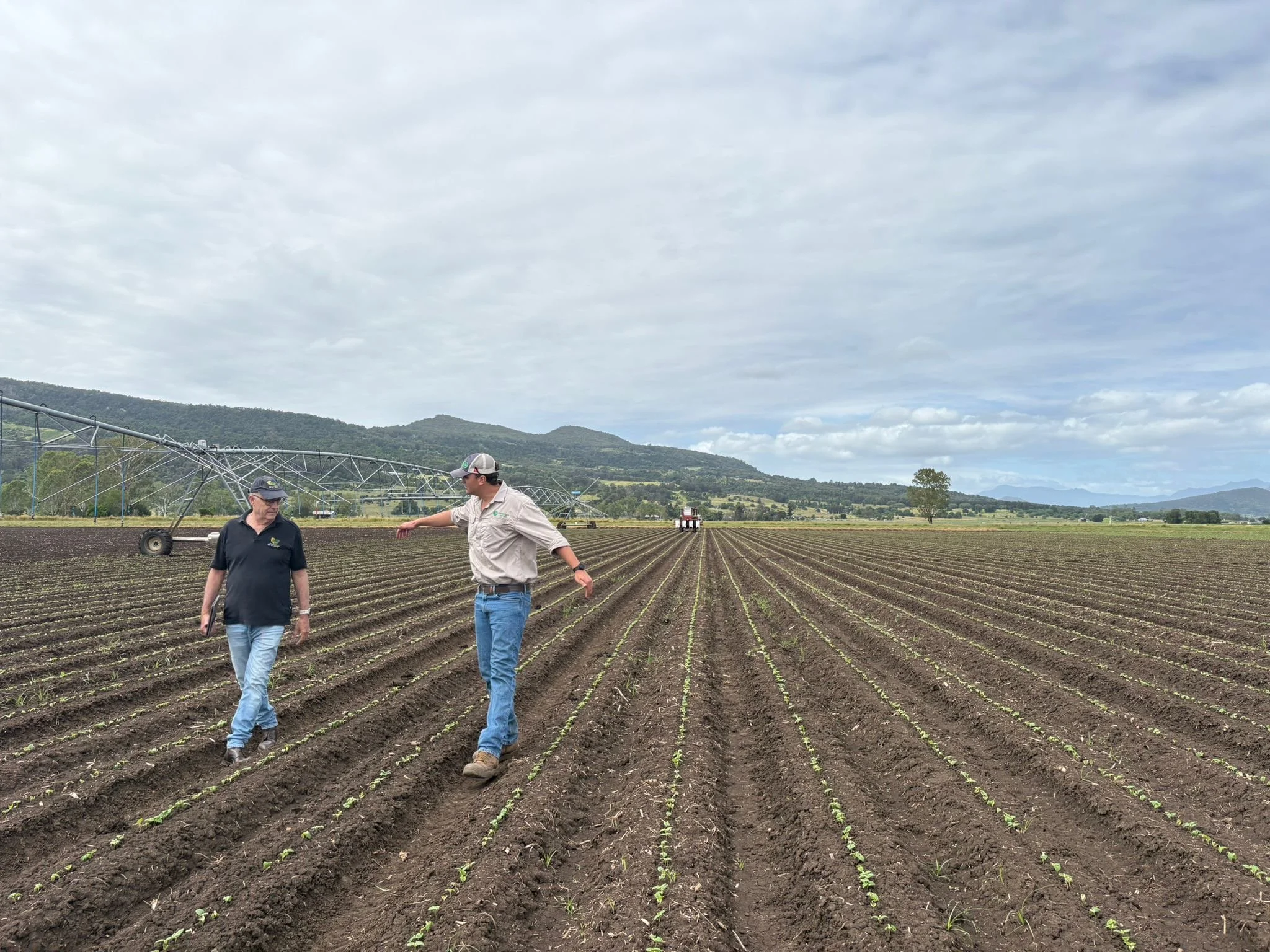
In Kalbar last week, our AHR project leads Anne Nolan and Gordon Rogers met with Luke Nelson from FarmTech Australia to see the Gen 2 in action.
The Gen 2 represents a major step forward in automated weed management, particularly for organic and high-value cropping systems. Capable of targeting and killing virtually all weed species, the machine is most effective on small weeds between strike and the first-leaf stage.
Upgrades incorporated into the Gen 2 include increased speed, reduced weight, and a new modular configuration. The most significant technical advancement is the shift from CO₂ laser tubes to infrared diode lasers, which last up to five times longer and require significantly less maintenance. In addition, Gen 2 introduces a liquid-cooled system to maintain consistent operation even in high-temperature conditions, along with enhanced imaging to improve plant detection and classification.
Weed identification is driven by high-resolution cameras paired with NVIDIA GPUs, allowing the system to process real-time field imagery. Each plant is categorised as either crop or weed, and if identified as a weed, the laser targets the centre of the plant. The system uses a base algorithm that is continuously refined through on-farm training, where images are labelled as crop or weed to improve accuracy.
The laser weeder has already been successfully used in beans, corn, carrots and onions. A recently released ‘large plant’ algorithm is expected to allow the system to work across a wide range of crops with minimal setup.
As part of the Next Gen Weeds project, the Gen 2 is currently being evaluated at Kengoon Farming, an organic farming environment, where the impact has already been tangible.
“The LaserWeeder is a huge opportunity for organic and high-value cropping,” Luke says.
“It also reduces the need for chemical use, which is particularly beneficial for organic production and helps ensure a continued supply of high-quality, local vegetables.”
In the field, the Gen 2 typically covers around 0.2 hectares per hour, with output varying according to weed pressure. Control is highly effective on small weeds, while more established plants may survive if the laser dwell time is not sufficient to fully destroy the growing point.
Designed to operate across a range of conditions, the machine is largely unaffected by changes in light thanks to integrated strobe lighting. Operation is avoided in wet conditions to protect the machinery and vision systems. Mounted on a standard tractor, the unit consumes approximately 8 litres of fuel per hour, although its weight can limit field access following heavy rainfall.
Luke Nelson sees the technology as a significant opportunity for labour-intensive farming systems.
“Weeds pose a significant risk to farms and crop yields, and this tool helps alleviate that pressure without relying as heavily on arduous, hard-to-find, and increasingly expensive manual labour.”
“This machine allows a number of crops to remain viable in the face of rising labour costs and ongoing shortages,” Luke explains.
Funding statement:
Next generation weed management (BY23002) is funded through Hort Innovation Frontiers with co-investment from FarmTech Australia and Tripod Farmers and contributions from the Australian Government.