

Under the walnut groves in Leeton NSW
Walnut blight, caused by Xanthomonas arboricola pv. juglandis (Xaj), poses a significant risk to Australia’s walnut industry, with potential yield losses of more than 80% in susceptible cultivars under the right environmental conditions. Current control strategies rely on copper and mancozeb-based sprays, however resistance risks and higher input costs limit their long-term viability.
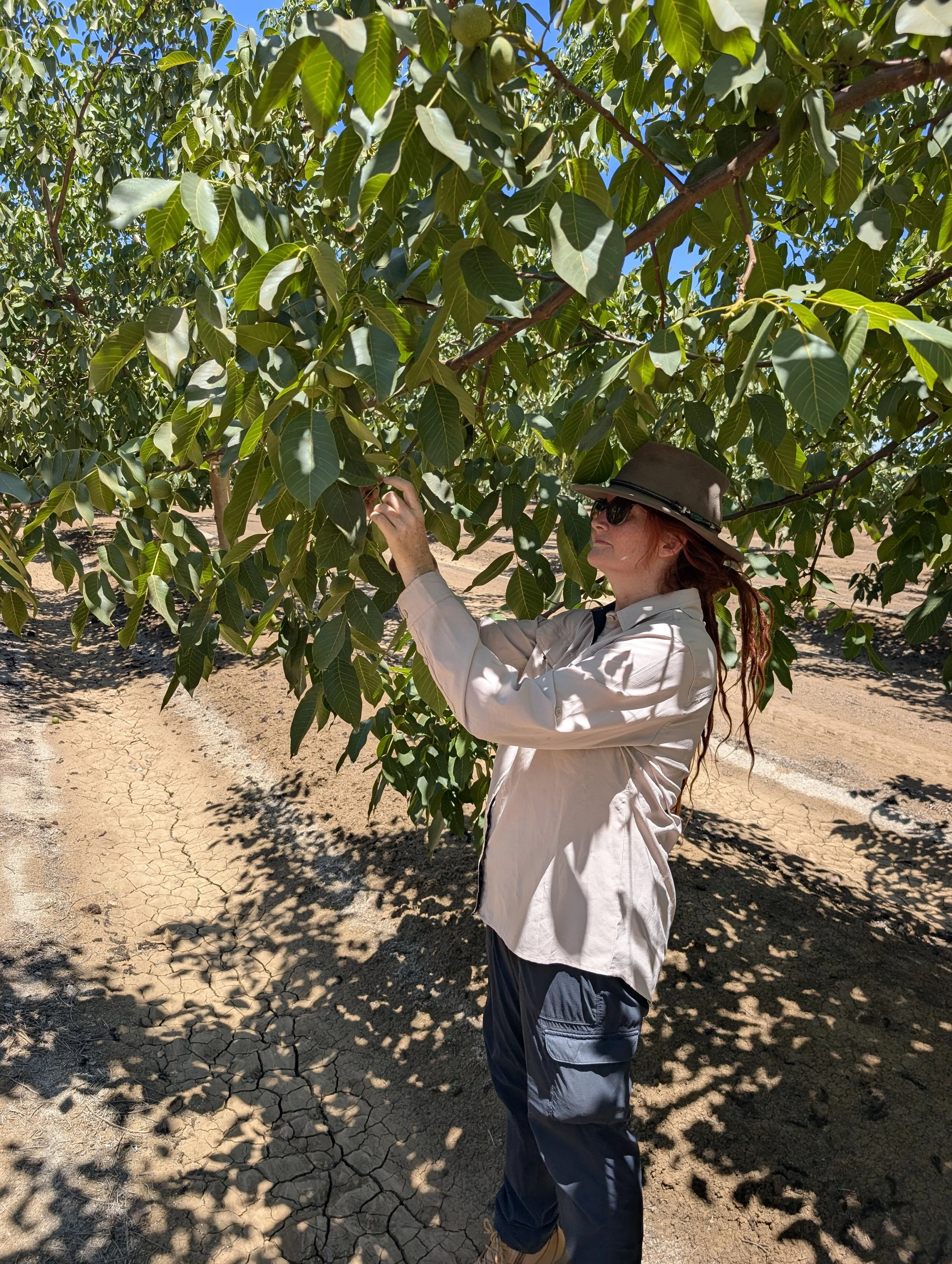
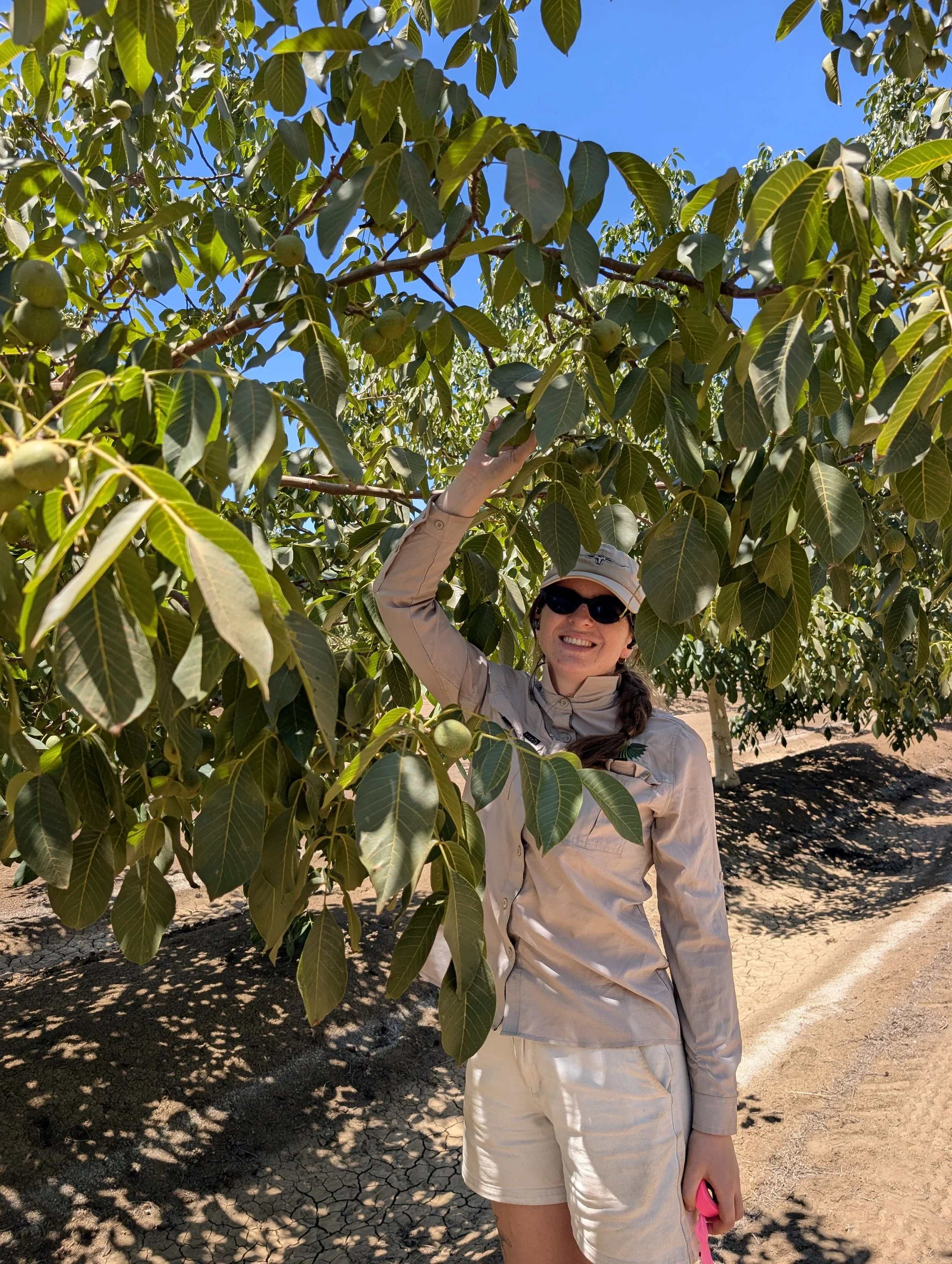
This week AHR’s Dr Naomi Diplock, Isabella Elmers, and Margot Roberts are out under the groves near Leeton, NSW, undertaking field assessments as part of the trials assessing walnut blight presence. They are also evaluating chemical control strategies, assessing spray coverage and trialling various agronomic practices to better understand their impact on disease incidence and severity.
This Hort Frontiers project aims to develop more sustainable and effective management options to support the long-term future of the industry. The research will focus on understanding resistance to copper, identifying new biological and chemical control solutions, and assessing how environmental factors influence disease development. The knowledge gained will assist growers in improving disease management, reducing environmental impact, and strengthening orchard resilience and productivity.
AHR is leading this collaborative work alongside Stahmann Webster, Duxton Nuts and the University of Queensland, bringing together industry and research expertise to deliver practical solutions for growers.
This project is funded through Hort Innovation Frontiers with co-investment from Applied Horticultural Research (AHR), Stahmann Webster, and Duxton Nuts, and contributions from the Australian Government.
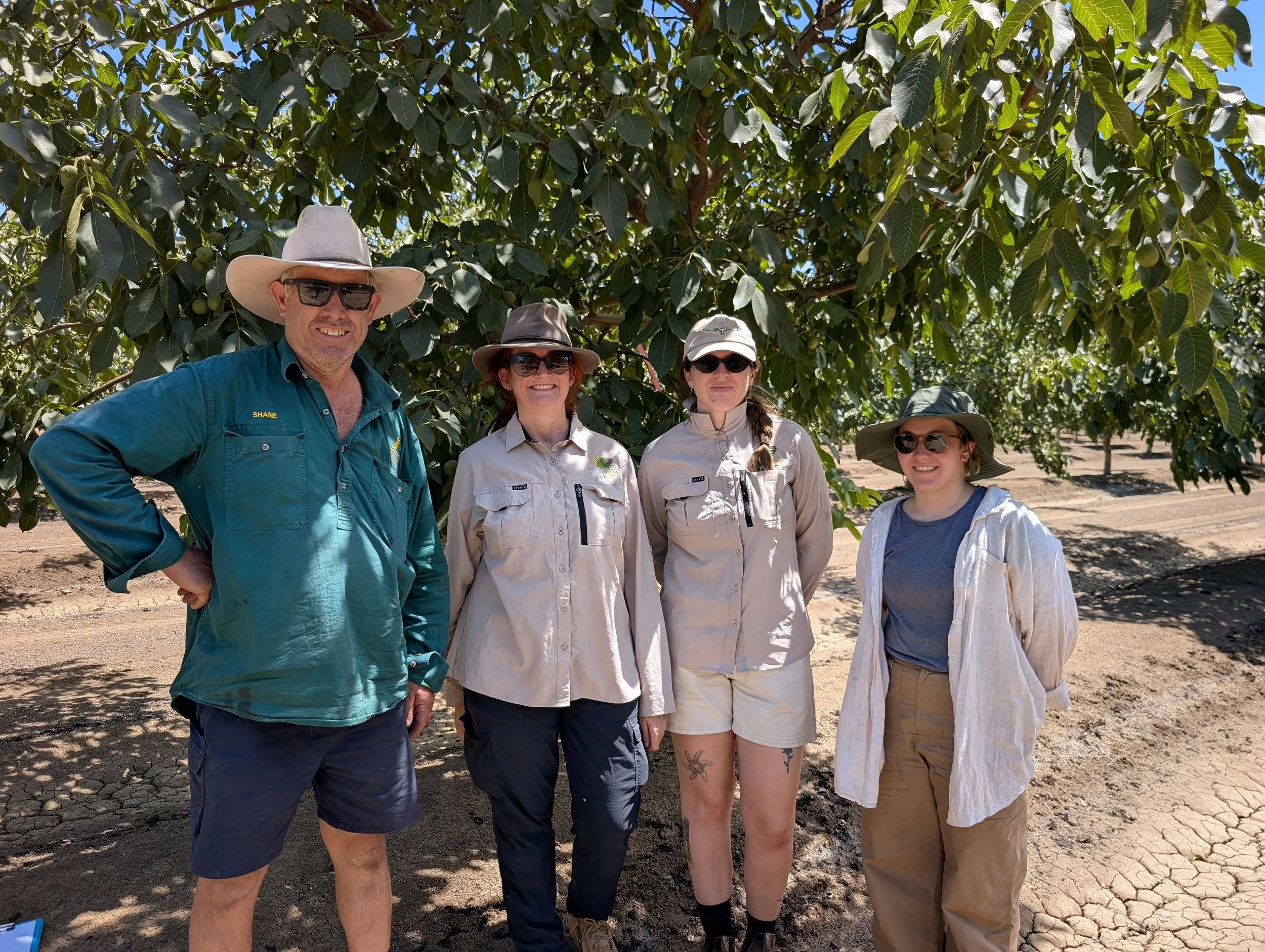
Shane Young (Duxton Nuts), Naomi Diplock, Isabella Elmers, and Margo Roberts (AHR)