


AHR
Environmental and agronomic optimisation of berries
Lead partner: Applied Horticultural Research
Projects
-
This project involves collaborating with agronomists and growers to implement on-farm research trials and demonstrations focused on improving irrigation and nutrition practices to reduce nitrate leaching
-
Develop and deliver targeted training for berry growers, agronomists, and supply chain members on improved nutrition, irrigation, and nitrate modelling systems to enhance yield, reduce costs, and minimise environmental impacts.

Project progress
Strawberry trial
A collaborative trial has commenced with a leading Western Australian strawberry producer to evaluate environmental sensing technologies to support agronomic and environmental optimisation in strawberry production. Baseline data have been collected, and sensors installed to monitor key parameters across varying seasonal and management conditions, with early insights informing subsequent project activities.
Blueberry trial
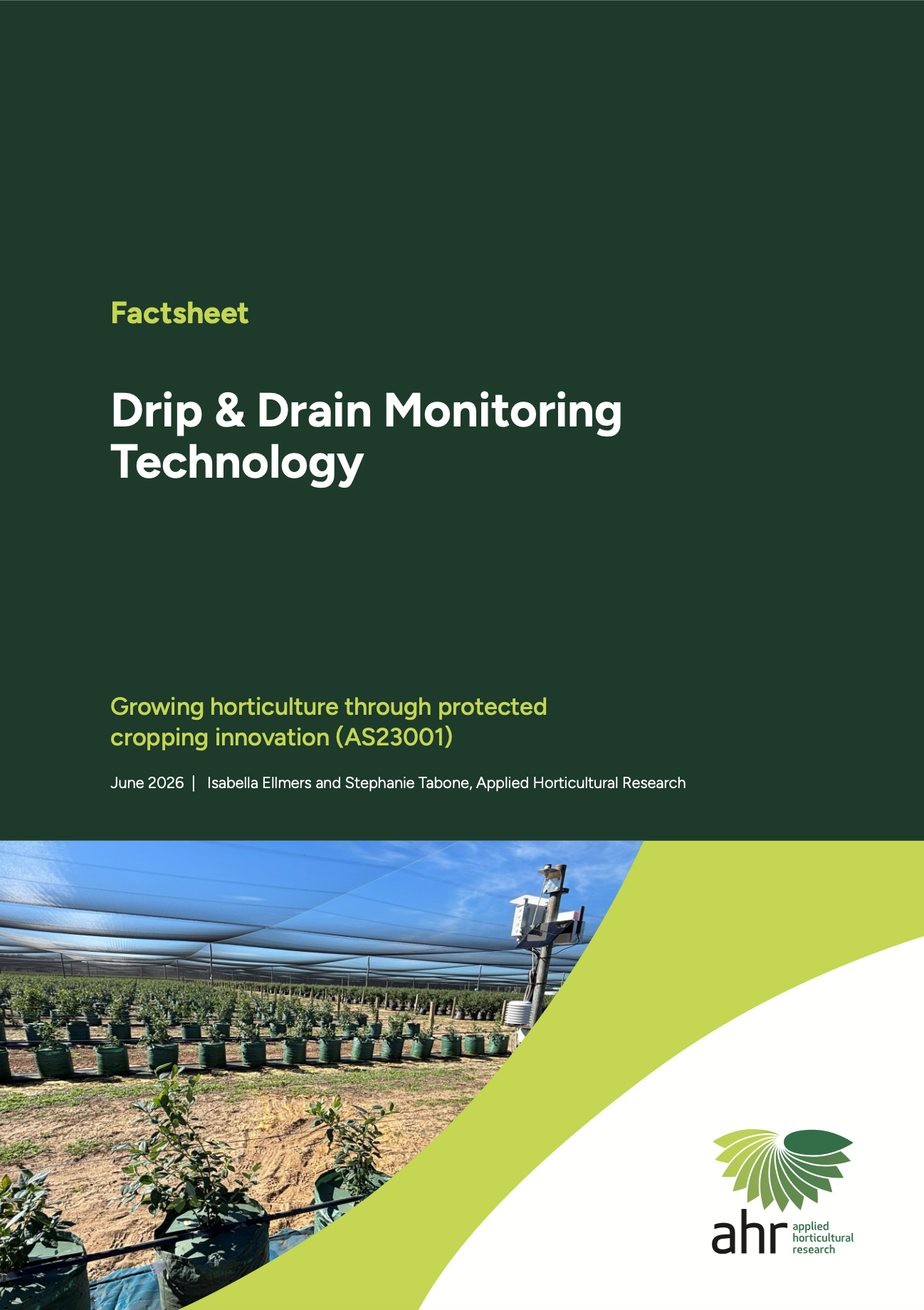
A second trial is being explored with a leading blueberry producer to assess technologies for automated data collection and monitoring of the crop. This work will also investigate innovative approaches to improve irrigation and nutrition management using real-time data insights.
To support this activity, a review of available technologies has been undertaken, and a reference matrix is being developed to guide technology selection and integration across protected cropping systems.

Introduction to the trials
Take a listen to this episode from the Protected Cropping Podcast series, where we interview key partners of the program.
In this episode, Anita Chennell speaks with Demetrio Bruno (Research Agronomist, AHR) about the current trials running with commercial berry farmers in Western Australia.
How do you know if your berries are getting the right water and nutrients, or if some is draining away? Deme explains what data the trials are tracking, why it matters and how taking the guesswork out could improve crop performance, cut costs and reduce nutrient losses.
Workstream Resources
Factsheet
Drip and drain monitoring technologies
Explore the protected cropping workstreams


